
Master SEO for Kenyan startups and dominate local search in 2026. Build sustainable leads without expensive ads. Follow Teresia for more.
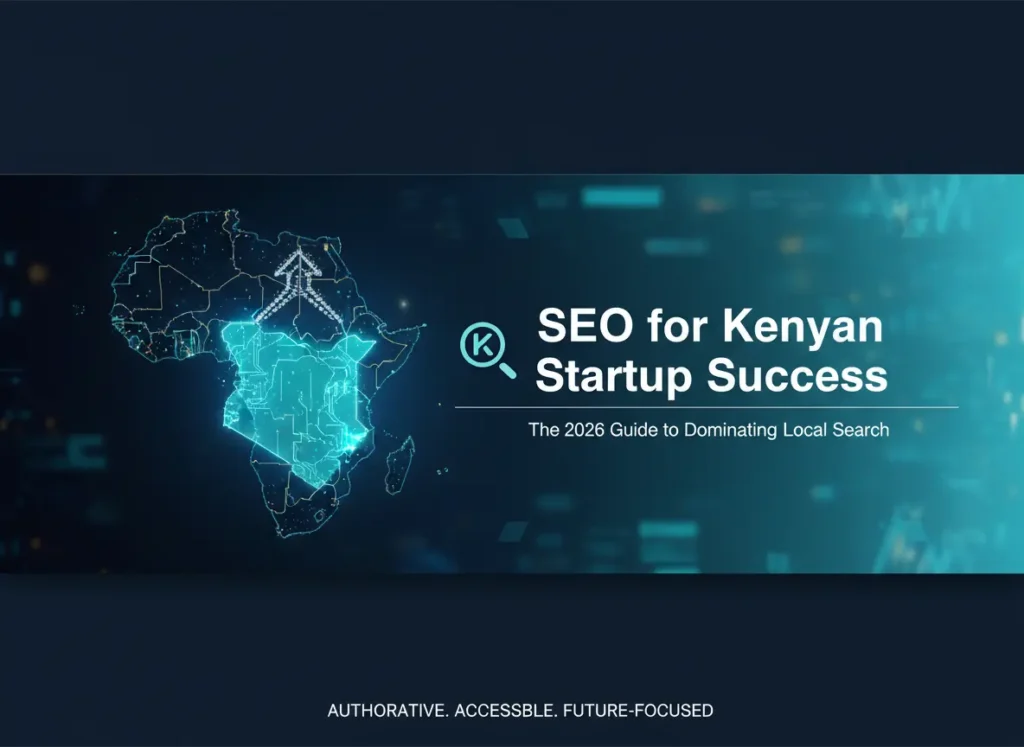
SEO for Kenyan Startup Success: The 2026 Guide to Dominating Local Search
Introduction
Your website is live. Your product is solid. Your M-Pesa integration works. And yet, when someone in Nairobi searches for exactly what you offer, your startup is nowhere to be found.
Instead, they find your competitor. The one with the bigger budget. The one who has been around longer. The one who understood that in Kenya’s digital economy, being findable is not optional. It is survival.
Here is what most Kenyan founders miss. Over 90% of Kenyan internet traffic comes from mobile devices . Google now uses mobile-first indexing, meaning it primarily evaluates and ranks the mobile version of your website, not the desktop version.
If your mobile experience is slow, confusing, or broken, your rankings will suffer even on desktop searches.
And here is the number that should stop you in your tracks. 96.55% of all content published online gets no traffic from Google whatsoever.
None. Zero. That means the vast majority of Kenyan startups, including talented, hardworking, genuinely skilled ones, are invisible to the very customers who need them most.
In the vibrant tech hubs of Nairobi, Mombasa, and Kisumu, the competition for digital visibility has never been fiercer. Many local ventures struggle with ghost-town websites that attract zero traffic, primarily because they treat search engines as an afterthought.
In the current landscape of digital marketing Kenya, simply having a website is not enough. You need a targeted strategy. Mastering SEO for Kenyan startup growth is the most cost-effective way to bypass expensive ad spend and build a sustainable pipeline of high-intent leads who are ready to buy.
In this article, you will learn why SEO for Kenyan startup growth is non-negotiable in 2026, how to prioritize local SEO Kenya for immediate wins, the technical foundations that actually move the needle, and a practical roadmap to start dominating search results this week. No generic Western advice. No buzzwords. Just what works on Kenyan ground.
Why SEO Is Non-Negotiable for Kenyan Startups
The Kenyan digital economy has shifted. With the rollout of 5G and the integration of M-Pesa into almost every online transaction, consumers expect instant, relevant results. If your startup does not appear when a customer searches for your service near me, you effectively do not exist.
Kenya has over 30 million internet users, and that number is growing exponentially . This is not just a statistic. It is a fundamental shift in consumer behavior. Your customers are using Google to find local services, vet businesses by reading reviews, compare product prices, and make purchasing decisions before they ever step foot in a store or make a phone call.
If your business is not highly visible in these search results, you are effectively invisible to the majority of your potential market.
And here is what separates the startups that win from the ones that disappear. The vast majority of Kenyans access the internet via their smartphones on networks like Safaricom and Airtel . Google knows this, which is why it uses a mobile-first indexing system. This means it primarily looks at the mobile version of your website to determine its rankings.
A professional SEO strategy ensures your website is perfectly optimized for mobile, fast, easy to navigate, and providing a seamless experience that Google rewards with higher rankings. A clunky mobile site is a direct route to the bottom of the search results .
For a startup investing KES 50,000 to 300,000 per month on digital marketing, the question is not whether you can afford to build this system. The question is whether you can afford not to.
The Global SEO Trap Most Founders Fall Into
Many Kenyan founders follow generic Western SEO advice that does not account for local nuances. Sheng search terms. Mobile data costs. The importance of trust-building in a market where online fraud is a real concern. The reality that your customer is on a Safaricom bundle, not unlimited Wi-Fi.
To win, you must localize your approach.
The global SEO trap looks like this. Targeting broad English keywords that American audiences search for. Writing content that sounds like it came from Silicon Valley. Ignoring the fact that Kenyan users search with natural language, like best affordable hotels in Nairobi or where can I buy running shoes near me.
Using payment language that assumes credit cards, when your customer is reaching for M-Pesa.
The startups that dominate local search are the ones that speak the language of their customer. Not just Swahili and English, but the specific search behavior, the specific anxieties, the specific trust signals that make a Kenyan user choose you over a competitor.
Local SEO Kenya for Immediate Wins
For most startups, your first customers are in your backyard. Local SEO Kenya is the practice of optimizing your presence to appear in location-based searches.
Claim and Optimize Your Google Business Profile
This is your digital storefront. Ensure your Name, Address, and Phone number are consistent across the web. Fill out every detail. Hours, location, services, photos, updates. Ask customers for reviews and reply to them. This boosts your visibility in Google’s local pack, the top results shown for local intent searches.
In Kenya, social proof is currency. Encourage your early adopters to leave reviews on your Google Business Profile. Responding to these reviews, both positive and negative, signals to Google that you are an active, trustworthy entity.
Use Hyper-Local Keywords
Instead of just targeting fintech apps, target fintech startups in Nairobi or best lending apps in Kenya. Instead of just restaurant, try affordable restaurant in Nairobi Westlands or best chicken in Eldoret.
These targeted keywords help potential customers in specific locations find your business more easily on search engines. Use tools like Google Keyword Planner, Ahrefs, or SEMrush to discover popular search terms in your industry and location.
Build Local Landing Pages
If you serve different towns or counties, create separate pages for each location. This helps you rank in multiple regions. Include local language, landmarks, and testimonials to make them resonate with local readers and Google.
A Kilifi-based tour company that optimized for best tours in Kilifi saw traffic double within three months. A Mombasa interior design company targeting affordable interior designer in Mombasa increased monthly inquiries by 120% within six months.
These are not miracles. They are mechanics.
Build Local Citations and Backlinks
Citations are online mentions of your business name, address, and phone number. These should be consistent across directories like Yellow Pages Kenya, Google, Facebook, Bing, and local blogs. This builds trust with Google and drives your local rank up.
Ask local bloggers, newspapers, and organizations to link to your site. Host or sponsor events. Run community initiatives and ask for press. Backlinks from local sources tell Google you are a real part of the community and you deserve to be on top.
Mobile-First Is Not Optional
Over 90% of Kenyan internet traffic comes from mobile devices . If your site takes more than 3 seconds to load on a 4G connection, you have already lost the lead.
Speed and Accessibility
Use WebP formats for image compression to keep your site light. Remove unnecessary scripts and plugins. Optimize code and minify where possible. A mobile page that takes longer than three seconds to load loses more than 50% of users.
M-Pesa Integration
From a conversion standpoint, mentioning M-Pesa accepted on your landing pages can reduce bounce rates as it builds immediate trust. Your customer does not want to see credit card fields. They want to see Paybill numbers, STK push options, and the familiar green M-Pesa logo.
Click-to-Call Buttons
Ensure your phone number is easily clickable for mobile users looking for a quick inquiry. On mobile, users interact with thumbs, swipes, and short attention spans. Large, tap-friendly buttons, simple navigation menus, and clear property filters are not optional. They are critical.
Progressive Web Apps
PWAs combine the best of web and mobile apps. They are fast, reliable, and offer offline capabilities, making them ideal for Kenyan users with inconsistent internet access.
Semantic SEO and E-E-A-T for Startups
Google’s 2026 algorithms prioritize Experience, Expertise, Authoritativeness, and Trustworthiness. For a startup, this means you cannot just fake it.
Create People-First Content
Stop writing for bots. Use natural language optimization by answering real questions your customers ask via WhatsApp or over coffee.
Instead of Affordable SEO services, use an H3 like How much does SEO cost for a small business in Nairobi? Instead of Digital marketing agency, try I help seed-stage fintech startups in Nairobi build acquisition systems that do not rely on rented Meta audiences.
This is how you build topical authority. Not by keyword stuffing, but by answering real questions in real language.
Semantic Keywords to Integrate
To build topical authority in the digital marketing Kenya niche, integrate these terms naturally.
Online visibility for startups. Search engine ranking Kenya. Content marketing Nairobi. Mobile-first indexing. WhatsApp Commerce integration. M-Pesa checkout optimization.
These are not just keywords. They are the language of your customer’s search intent.
Technical SEO Foundations
Your search engine ranking in Kenya depends heavily on how well Google can read your site.
| Feature | Action for Startups |
|---|
| SSL Certificate | Ensure your site has HTTPS trust factor |
| Sitemap | Submit a clean XML sitemap via Google Search Console |
| Schema Markup | Use Organization and LocalBusiness schema code |
| Internal Linking | Link blog posts to service pages to pass authority |
| Article Schema | For blog posts to win Rich Snippets |
| FAQ Schema | For help pages to appear in expanded search results |
Pro tip. Use structured data markup to provide search engines with detailed information about your business, making it easier for them to understand and display your content in local search results.
For Kenyan startups, technical SEO also means optimizing for low-bandwidth connections. Core Web Vitals, site speed, and mobile-first indexing compliance are not just best practices. They are survival requirements .
Your First Week Action Plan
If you are still reading, you are ready to act. Here is exactly what to do in the next 7 days.
Day 1. Audit your site speed using Google PageSpeed Insights. If it scores below 70 on mobile, fix that before anything else.
Day 2. Claim your Google Business Profile. Fill every field. Add photos. Make your NAP consistent across all platforms.
Day 3. Research 10 hyper-local keywords your customers actually search for. Use Google autocomplete and People Also Ask.
Day 4. Rewrite your homepage headline to say exactly who you help and what result they get, in under five seconds.
Day 5. Create one piece of localized content. A blog post answering a real Kenyan customer’s question.
Day 6. Set up M-Pesa integration on your landing page. Add click-to-call buttons. Make your site thumb-friendly.
Day 7. Ask three customers for Google reviews. Respond to any existing reviews. Build your local citation profile.
That is it. No expensive tools. No agency retainers. Just you, your startup, and the courage to be found.
FAQ SECTION
How long does SEO for Kenyan startup sites take to show results? Typically, you will see initial movement in 3 to 6 months. However, local SEO like ranking on Google Maps can show results in as little as 45 days if your profile is well-optimized.
Is SEO better than Facebook Ads for Kenyan businesses? Both have their place. Facebook is great for interruption marketing, but SEO captures intent. A person searching Google for legal services in Kenya is much closer to a purchase than someone scrolling through social media. SEO is also the most cost-effective, long-term marketing investment. The authority, content, and rankings you earn continue to deliver organic traffic for months and years, while paid ads vanish the moment you stop paying .
Do I need a blog to rank in Kenya? While not strictly mandatory, a blog allows you to target long-tail keywords and answer specific customer pain points, which significantly boosts your online visibility for startups. One searchable blog post per month compounds into serious authority over time.
What is the most important SEO factor for Kenyan startups? Mobile-first optimization. With over 90% of Kenyan internet traffic coming from mobile devices, and Google using mobile-first indexing, a slow or broken mobile experience will kill your rankings before you even begin .
How do I build backlinks as a Kenyan startup? Start local. Collaborate with Kenyan bloggers, universities, and business directories. Host community events and ask for press coverage. Guest post on local industry publications. Each backlink from a credible local source is a digital vote of confidence that boosts your ranking authority.
8. FAQ SECTION
How long does SEO for Kenyan startup sites take to show results? Typically, you will see initial movement in 3 to 6 months. However, local SEO like ranking on Google Maps can show results in as little as 45 days if your profile is well-optimized.
Is SEO better than Facebook Ads for Kenyan businesses? Both have their place. Facebook is great for interruption marketing, but SEO captures intent. A person searching Google for legal services in Kenya is much closer to a purchase than someone scrolling through social media. SEO is also the most cost-effective, long-term marketing investment .
Do I need a blog to rank in Kenya? While not strictly mandatory, a blog allows you to target long-tail keywords and answer specific customer pain points, which significantly boosts your online visibility for startups.
What is the most important SEO factor for Kenyan startups? Mobile-first optimization. With over 90% of Kenyan internet traffic coming from mobile devices, and Google using mobile-first indexing, a slow or broken mobile experience will kill your rankings before you even begin .
How do I build backlinks as a Kenyan startup? Start local. Collaborate with Kenyan bloggers, universities, and business directories. Host community events and ask for press coverage. Guest post on local industry publications. Each backlink from a credible local source boosts your ranking authorit